Stephen Reeder
Director of Marketing
E-mail

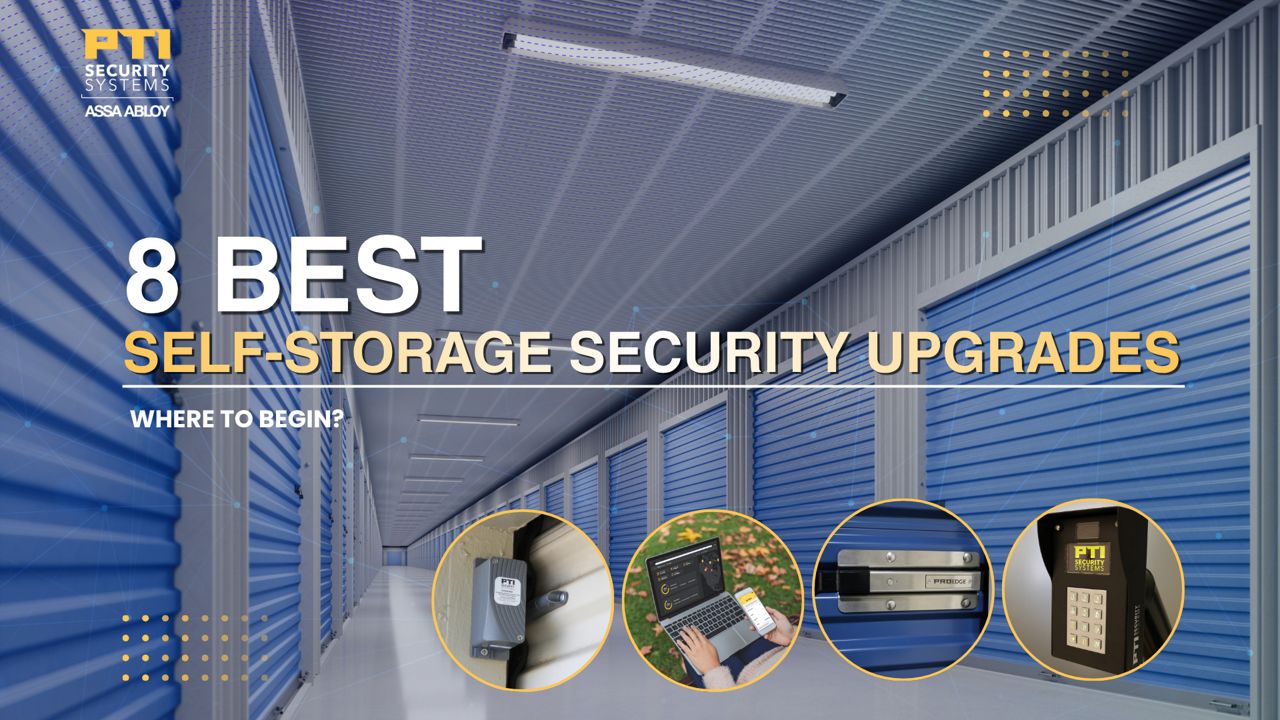
A gate that opens for the wrong vehicle, a hallway with a camera blind spot, a unit door left unsecured - most storage losses do not come from a single catastrophic failure. They come from small gaps that stack up over time. The best self storage security upgrades address those gaps as an operating system, not as isolated hardware purchases.
For self-storage owners and operators, that distinction matters. A camera alone does not control access. A gate alone does not protect individual units. A lock alone does not tell you who entered the property, when they entered, or whether they should have had access in the first place. Stronger site protection comes from upgrades that work together across the gate, the unit, and the management workflow.
Not every upgrade delivers the same operational value. Some improve visibility after an incident. Others prevent the incident from happening. The highest-performing investments usually do both while also reducing staff friction and giving operators more control over daily access.
That is why the best self storage security upgrades tend to share three traits. They are designed specifically for self-storage traffic patterns, they support reliable tenant access without giving up control, and they scale across single sites or portfolios without becoming difficult to manage. If a system creates more manual work for managers or leaves key points disconnected, it may add equipment without adding real protection.
If operators are deciding where to invest first, access control usually deserves priority. In self-storage, the gate is more than a perimeter feature. It is the first decision point for who gets onto the property and when. If that layer is weak, every other downstream security measure has more ground to cover.
Modern access control upgrades give operators tighter control over facility entry, tenant status, time-based permissions, and activity records. That matters for both security and operations. When the system can automatically permit or deny access based on account standing or assigned access rules, staff spend less time making exceptions and more time managing the property.
A stronger access control setup also helps reduce a common problem in storage facilities - legitimate users unintentionally creating opportunities for unauthorized access. Tailgating, shared gate codes, and loosely managed entry credentials are all easier to address when access is tied to controlled, trackable credentials rather than broad, static permissions.
Many facilities still rely on older keypad setups that technically work and believe they do not need to upgrade their keypads. Shared codes, worn hardware, and limited reporting can turn a basic access system into a weak point. Upgrading keypads and credential management can improve reliability, but the bigger gain is accountability.
Each access event should connect to a user, a time, and a location. When operators can see how the property is being used in real time and historically, they can respond faster to unusual patterns and tighten procedures before losses occur.
Perimeter security gets attention because it is visible. Unit-level security matters just as much because that is where the stored property actually sits. A facility can have a controlled gate and good lighting, yet still be exposed if individual units are not monitored at the door.
Door alarms are one of the most practical upgrades available because they extend protection down to the tenant space. They can alert operators to unauthorized entry, open doors, or activity that does not align with normal access expectations. That gives staff a chance to act while an event is happening, not after a tenant reports a loss.
For facilities with long hallways, multi-story buildings, or large numbers of enclosed units, this upgrade becomes even more valuable. Visual oversight is naturally limited in those environments. Unit alarms help close that visibility gap without requiring constant physical patrols.
This is where generic commercial security packages often fall short. They may provide perimeter monitoring, but self-storage has a unique challenge: hundreds or thousands of individually accessed spaces, each with its own risk profile. The best self storage security upgrades account for that reality by extending security beyond the front gate and into the unit itself.
That does not mean every facility needs the same alarm configuration. Indoor climate-controlled sites, drive-up properties, and mixed-use facilities all have different traffic patterns and exposure points. The right fit depends on layout, staffing model, and how much direct visibility managers have into tenant activity.
Cameras remain an essential part of any site protection strategy, but operators should be clear about what surveillance can and cannot do. Cameras are strongest when they are positioned to document access points, traffic flow, unit corridors, elevators, and other transition areas where activity can be verified against access records.
The common mistake is treating camera count as the main measure of security. More devices do not automatically mean better coverage. Placement, image quality, retention, and the ability to pair footage with access events are what turn surveillance into a useful operational tool.
A well-designed surveillance upgrade helps in two ways. It deters some bad actors simply by increasing visibility, and it strengthens incident response when something does happen. For operators managing claims, disputes, or law enforcement requests, that second piece is critical.
Locking hardware is often viewed as a basic facility component, but it has a major impact on overall site security. Older or inconsistent locking setups can create service issues, tenant confusion, and uneven protection from one unit to the next. Upgrading to purpose-built locking hardware improves physical resistance, but it can also improve standardization across the property.
That matters more than it may seem. Standardized hardware simplifies maintenance, supports cleaner operating procedures, and reduces the number of exceptions staff need to manage. In portfolio environments, consistency also makes training easier and helps operators scale without recreating the same vulnerabilities at each location.
The trade-off is cost. Hardware upgrades can require more upfront investment than software or credential updates, especially across larger sites. But when existing hardware is outdated, unreliable, or mismatched, delaying replacement often leads to higher service costs and a weaker security posture over time.
The biggest improvement usually does not come from any one device. It comes from integration. When gate access, door alarms, keypads, surveillance, and site activity data operate as one system, operators gain clearer control and faster decision-making.
That integration changes day-to-day operations. Staff can verify whether a person entering the facility should be there, whether the unit they accessed was armed or disarmed properly, and whether camera footage supports the event record. Without integration, managers are forced to piece together separate logs and disconnected hardware, often after the fact.
This is also where self-storage specialization matters. Facility workflows are different from office buildings, retail sites, or industrial yards. Systems designed around self-storage operations are better positioned to support tenant access cycles, delinquency rules, move-ins, move-outs, and portfolio-level visibility.
For most operators, the right upgrade sequence depends on current risk exposure. If unauthorized site entry is the core problem, start with access control. If break-ins are occurring at the unit level, door alarms and locking hardware may need to move up the list. If incident resolution is slow or inconsistent, surveillance and system integration may deliver the bigger operational return.
Age of the facility matters too. New developments can plan security into the site from the start, which makes integrated deployment easier. Existing facilities usually need a more phased approach, balancing immediate vulnerabilities against budget and installation realities.
It also depends on staffing. A remotely managed site needs stronger automated control and event visibility than a property with frequent on-site presence. Multi-site operators typically benefit more from centralized management tools than from isolated hardware improvements at individual facilities.
That is why there is no universal checklist. There is, however, a reliable principle: prioritize upgrades that reduce preventable risk while improving control over access and response. In practice, that usually means building from the outside in - site entry, property movement, and then unit-level protection - while making sure each layer connects to the next.
For operators who want fewer blind spots and more control, the best move is rarely the flashiest device on the market. It is the upgrade that fits the way self-storage actually operates. PTI Security Systems has long focused on that exact challenge: giving self-storage facilities security infrastructure built for real access patterns, real risks, and real operational demands.
The facilities that stay ahead of security issues are usually not the ones chasing every new feature. They are the ones making deliberate upgrades that close known gaps, support staff, and keep control where it belongs - with the operator.

2026-08-26

2026-08-04

2026-08-01
2026-07-14

2026-06-24

2026-06-10

2026-05-27