Andrew Mastracchio
Marketing Manager
E-mail

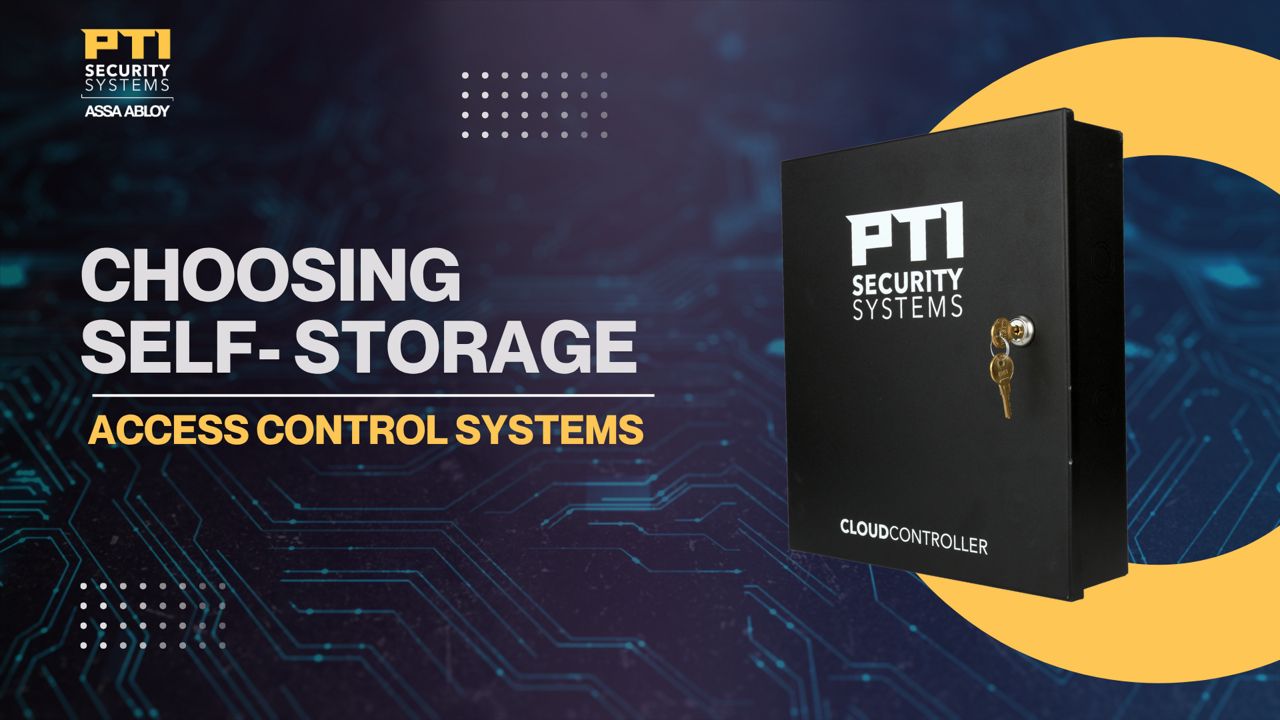
A gate that opens for the wrong vehicle at 11:40 p.m. is not a minor issue. For a self-storage operator, it can mean unauthorized site access, a tailgating incident, a theft claim, or hours spent reconstructing what happened. That is why self storage access control systems need to do more than open and close entry points. They need to support how a facility actually runs.
In self-storage, access control is part security system, part operational system. It affects tenant convenience, manager workload, after-hours accountability, and how confidently you can scale from one property to several. The right system is not just about restricting entry. It is about controlling who gets in, when they get in, where they can go, and what record is created when they do.
At a basic level, self storage access control systems regulate entry through gates, doors, elevators, and interior zones. In practice, they also connect access permissions to tenant status, individual units, site rules, and staff responsibilities. That is where a purpose-built self-storage platform separates itself from generic commercial access products.
A standard office access system may handle employees well enough. A self-storage facility has a different traffic pattern and different risks. Tenants arrive at irregular hours. Some facilities need elevator control tied to floor access. Others need zone restrictions for multi-building layouts, indoor corridors, or climate-controlled spaces. Operators also need to know whether access rights should change automatically when a tenant moves in, falls behind, transfers units, or vacates.
That level of control matters because most access problems are not dramatic security failures. They are small gaps in policy enforcement. A former tenant code that still works. A shared PIN passed to someone who should not be onsite. A gate event with no useful audit trail. Over time, those gaps create exposure.
A strong access control setup for self-storage usually starts with the gate, but it should not end there. Entry keypads, smart credential options, door controllers, integrated software, and site activity tracking all play a role. If the facility includes interior access points, the system should extend past the perimeter and maintain the same logic inside the property.
The most effective systems tie together three things: credential management, physical control points, and event reporting. If one of those pieces is weak, the entire setup becomes harder to trust. A facility may have quality hardware but poor visibility into access events. Or it may have good software but too many disconnected devices onsite.
For operators, integration is where the value becomes practical. When access rules reflect actual tenant data and facility rules, site management becomes more consistent. Staff spend less time overriding issues manually, and managers gain a clearer record of activity when questions arise.
Perimeter control matters because it is the main threshold between public space and protected property. But a gate code alone does not provide full site security. Once someone is inside, operators still need to control movement and document activity.
That is especially true for facilities with interior hallways, multiple buildings, or access-sensitive areas such as management offices and maintenance rooms. A layered system makes it harder for unauthorized individuals to move freely across the site, even if they get past the first checkpoint.
Many operators focus first on gate activity because it is easy to see. But unit-level signals, door alarms, and related monitoring can provide the context that gate logs alone cannot. If a tenant says they were never onsite, or a claim involves suspected forced entry, broader event history becomes much more useful.
This is one reason specialized providers in the self-storage category approach security differently. The question is not simply whether a credential worked. It is whether the site can produce a reliable chain of access information tied to real operating conditions.
Not every facility needs the same configuration, and that is where buying decisions often get off track. A newly developed Class A property with indoor units and elevator control has different requirements from a single-story drive-up site. A regional operator managing ten facilities also needs something different from an owner with one location and limited onsite staff.
The first question is how the property actually handles access. Consider tenant hours, staffing model, building layout, after-hours traffic, and whether access rules vary by zone or unit type. If your current process depends on staff making frequent manual changes, that is a sign the system is not doing enough of the operational work.
The second question is how much scalability you need. A system may work well at one property and become difficult to manage across a portfolio. Multi-site operators should look closely at centralized administration, consistent reporting, and how easily permissions can be managed across locations without introducing errors.
The third question is how the system handles exceptions. Real sites are full of them. Delinquent accounts, lock checks, temporary vendor access, emergency entry, and move-in day timing all create scenarios that expose whether a platform was built for self-storage or adapted from another market.
It is easy to compare systems by hardware specs or long feature lists. That rarely tells the full story. What matters more is whether the platform works as one operating environment.
If the keypad, gate operator, management software, individual door security, and event records all function independently, staff end up acting as the integration layer. That creates delays, workarounds, and inconsistent enforcement. It also increases the chance that an access change gets missed.
Integrated self storage access control systems reduce those gaps. When a tenant's status changes, the system should respond in a way that supports site policy without relying on manual follow-up. When an event occurs, managers should be able to see it in context rather than piecing together information from separate tools.
For that reason, the best buying decision is not always the system with the most visible features. It is often the one that produces the cleanest operational control every day.
One common mistake is treating access control as a one-time installation instead of an active management system. Hardware matters, but site rules, credential practices, and reporting standards matter just as much. If staff are sharing overrides casually or leaving old permissions active, the technology will not solve the real problem.
Another mistake is underestimating the difference between commercial access control and self-storage access control. Generic systems can appear capable on paper, but they may not handle tenant-based workflows, unit-level activity, or portfolio-wide management in a practical way.
A third issue is focusing only on entry convenience. Fast access is important for the tenant experience, but convenience without control creates exposure. Operators need both. The point is not to make access difficult. It is to make authorized access simple and unauthorized access harder to achieve and easier to identify.
When an access control platform is well matched to the facility, the benefits show up quickly. Managers spend less time troubleshooting entry issues. Tenant access rules are applied more consistently. After-hours events are easier to review. Staff gain confidence that the site is operating according to policy rather than habit.
That operational consistency matters as much as the security outcome. Facilities run better when the access system supports the business model instead of adding friction to it. This is where PTI Security Systems and other category-focused providers bring value that broad commercial vendors often miss. Self-storage has specific access patterns, specific vulnerabilities, and specific accountability requirements.
Choosing the right system means looking past the gate and asking a more useful question: will this platform help control the site the way your property actually works? If the answer is yes, you are not just buying hardware. You are putting stronger discipline behind every entry event on the property.
The best closing test is simple. If an incident happens tonight, will your system help you understand it, contain it, and respond with confidence tomorrow morning? That is the standard worth buying for.

2026-08-26

2026-08-04

2026-08-01

2026-07-14

2026-06-24
2026-06-10

2026-05-27