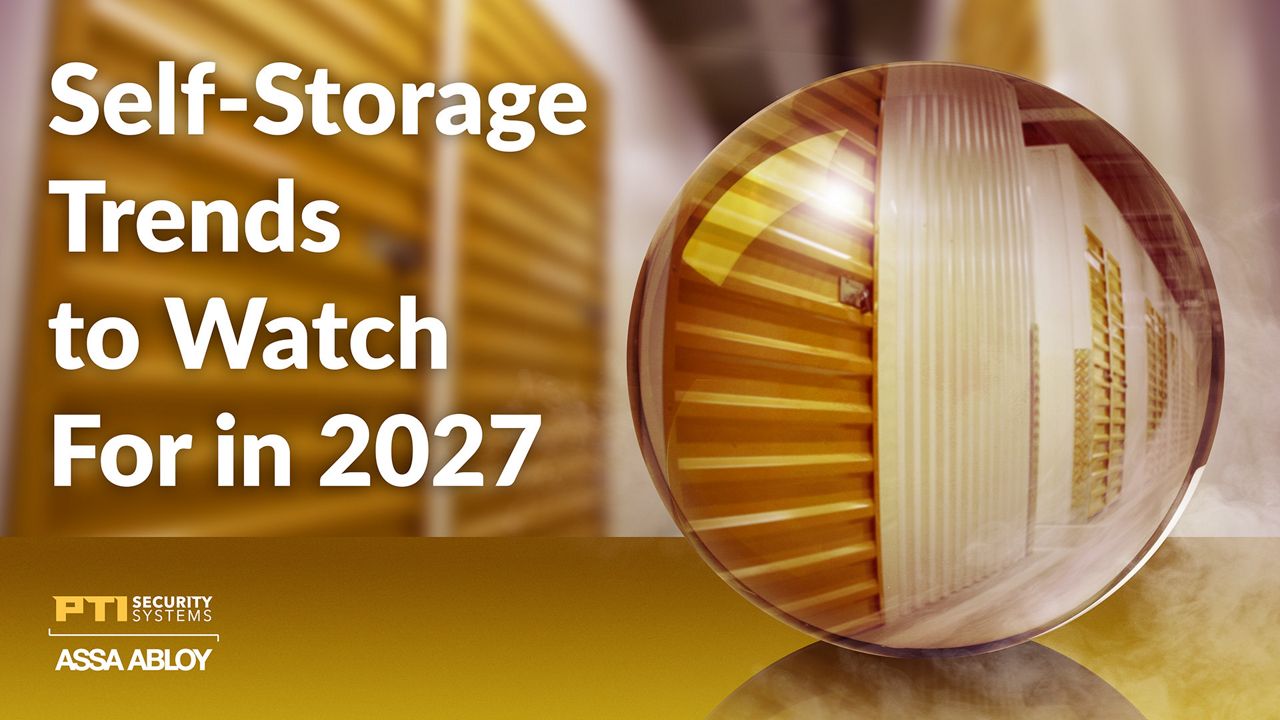
Self-Storage Trends To Watch For in 2027

-storage workflows. Operators should prioritize purpose-built platforms that reduce the need for manual workarounds at the site level.
Unit-level security will receive more attention
Perimeter security remains essential, but the unit door is where a tenant’s trust is ultimately tested. Unit-level alarms and intelligent locking hardware (such as PTI's ProEdge Smart Latch) give operators more visibility into activity that may otherwise go unnoticed until a customer reports a problem.
Expect more facilities to evaluate door alarms and electronic locking as part of a layered approach. These tools can help identify unauthorized unit entry, doors left open, and activity that does not match an authorized access event. The value is not simply adding an alarm. It is connecting a unit event to a clear operational response.
This does not mean every property needs the same level of unit-level technology. Climate-controlled buildings, high-value storage markets, and facilities with persistent security incidents may see a stronger return than a low-density drive-up site with limited risk exposure. Site design, customer mix, and local crime patterns should guide the investment.
Integrated systems will matter more than isolated features
A gate, keypad, camera, door alarm, and management platform can each perform a useful function. But isolated systems create blind spots when staff must piece together events across multiple screens or vendors.
One of the most important self storage trends to watch for in 2027 is greater demand for integrated security infrastructure. Operators will increasingly expect a denied gate entry, a unit alarm, and a site access record to provide a clearer picture of what happened and when.
Integration also supports consistency across a portfolio. Centralized access management can help multi-site operators apply policies, review exceptions, and maintain security standards without relying on different processes at every property. For a growing operator, this can be as important as the security hardware itself.
Remote operations will require stronger exception management
Remote and hybrid management models are likely to remain common, particularly for facilities with lean staffing. That model can improve efficiency, but it raises the stakes for access control and event visibility. When no manager is physically on site, the system must provide reliable information and make exceptions easy to identify.
In 2027, operators should focus on the events that require action: repeated invalid entry attempts, access outside defined schedules, open units, and alarms tied to a specific door or user credential. A long event log has limited value if staff cannot quickly determine what deserves attention.
The goal is controlled automation, not unattended security. Remote operations work best when teams have defined response procedures, dependable communication paths, and systems that provide usable context before someone makes a decision.
Security upgrades will be evaluated as portfolio infrastructure
For single-site owners, an upgrade may begin with a specific problem such as unauthorized entry or aging gate hardware. For multi-site operators, the conversation is increasingly about standardization. Can the selected system support current locations, new acquisitions, and different property configurations without forcing a full redesign?
That is why scalable architecture, consistent credential management, and specialized self-storage support will carry more weight in purchasing decisions. The lowest initial equipment cost may not be the lowest operational cost over time if it creates separate workflows, inconsistent reporting, or difficult expansion.
PTI Security Systems is built around this operational reality: security systems should help facilities control access, protect units, and support efficient management at scale.
The most useful 2027 planning step is to map how people move through the property, where staff lose visibility, and which events demand a response. That assessment turns security from a collection of devices into a controlled operating system for the facility.